regression
Since writing was invented, five thousand years ago, the authority inferred from words and numbers has increasingly led to these being taken as the things they represented; and human culture became LITERAL.
In the urban societies that LITERAL cultures built, occupations and pursuits grew more numerous, increasing in complexity, scale, and power. Together with the activities of their rulers, their courts and professions, these became known and understood more through the words that represented them than by everyday experience. With digitization, encoded procedures represented their organizations and social forms, and these then have then readily been accepted as actuality.
Adaptation to cultural environments is more formative the younger an individual is; and the younger an individual is the more readily they conflate symbols with natural signs. If development then takes place in an environment privated of ORGANIC social interaction, there is little alternative than to use symbols to build an understanding and knowledge of the world, building it then too fast and too certainly.
words and maps
In his paper, 'A Non-Aristotlean System and its Necessity for Rigour in Mathematics and Physics', Alfred Korzybski made two observations: 'A map is not the territory', and 'Words are not the things they represent'. In the abbreviated quotation below, these are highlighted in bold; italics representing emphases by its author.
... A) A map may have a structure similar or dissimilar to the structure of the territory. B) Two similar structures have similar 'logical' characteristics. Thus, if in a correct map, Dresden is given as between Paris and Warsaw, a similar relationship is found in the actual territory C) A map is not the territory. D) An ideal map would contain the map of the map, the map of the map of the map., endlessly. ... We may call it self-reflexiveness. Languages share with the map the above four characteristics. A) Languages have structure, thus we may have languages of elementalist structure such as 'space' and 'time', 'observer' and 'observed', 'body' and 'soul', 'senses' and 'mind', 'intellect' and 'emotions', 'thinking' and 'feeling', 'thought' and 'intuition'., which allow verbal division or separation. Or we may have languages of a non-elementalist structure such as 'space-time', the new quantum languages, 'time binding', 'different order abstractions', 'semantic reactions'., which do not involve verbal division or separation.; also mathematical languages of 'order', 'relation', 'structure', 'function', 'variable', 'invariant', 'difference', 'addition', 'division'., which apply to 'senses' and 'mind', that is, can be 'seen' and 'thought of',. B) If we use languages of a structure non-similar to the world and our nervous system, our verbal predictions are not verified empirically, we cannot be 'rational' or adjusted,. ... ,. C) Words are not the things they represent. D) Language also has self-reflexive characteristics. We use language to speak about language, which fact introduces serious verbal and semantic difficulties solved by the theory of multiordinality. ... Alfred Korzybski, 1931.
Research into the psychological impacts of online social media and gaming, (SOME), spurred by the COVID pandemic and its requirements to self-isolate, has primarily been driven by concerns regarding its impact on minors. While its primary focus has then been on learning and development in respect of parenting and teaching, its observations are more widely relevant.
Learning and development are universal, and parenting and teaching are rooted in their overarching social context. The impacts SOME reportedly has on socioemotional development then have a consequential impact on psychosocial behaviours. These are central, not only to the integrative development of an individual's schema and identity, but also to the development of societies from families to communities, nations and beyond.
Most importantly, the change that SOME technologies are driving is transformative in nature. The political and economic context that provides the foundation and ongoing support for this revolution should therefore be scrutinized at every level of society. Instead of promoting a sense of individual helplessness, and accepting current developments as an inevitability, it should be remembered that, ultimately, context not content is king.
SO, as in SOccer, and ME, as in MEntal — borrowed from Finnish.
See, for instance, Electronic Screen Use and Children's Socioemotional Problems: A Systematic Review and Meta-Analysis of Longitudinal Studies. American Psychological Association, Psychological Bulletin 2025, Vol. 151, No. 5, 513-543.
context and content
Writing provided a container for MEANING, fencing it off from sensibility and actuality, and in that, from ourselves. History began as if before it had never been, and a narrative of progress, from darkness towards the light, became the mythology of modernity.
At first holding back oblivion, like handprints on cave walls, writing kept records. But writing requires a beginning and an end, with meaning sandwiched in between, whereas actuality has neither. Writing then quickly began to drain, revise, and rewrite actuality, and with that the truth.
Where once, words only strove to represent things, they became them. And although this was convenient, it was also reflexive, steadily rendering us neotenous — it's too easy, too quick, to prove we're right and they're wrong; or to show them as even more so to imagine otherwise. Writing seems to have ended our struggle to find the truth we are a part of, but in our flight from death it seems to have turned our backs on life.
*/ ?>Characterized by continuous or natural development; Oxford English Dictionary [OED:] 6. e
Fluency, is generally limited to describing dexterity of verbal expression; however FLUENCY here refers to EXPRESSION in general, and in particular to its aptness, in its environmental FRAME, to the communicative goals of the MEANING that informed it..
MEANING here, refers to that which a BEING PERCEIVES of the EXPRESSIONS of NOUMENA. Developed and encoded through the FRAME of ONTOLOGENY, MEANING is then inheritable.
signs
Aristotle and Plato wrote about signs, and about symbols; signs in the world of nature, and symbols in human culture. Now, symbols are considered to be a type of sign; whether they are iconic or signified through arbitrary conventions rather than through any direct relationship with what is signified — such as numbers, letters, words, etc.
Derived from the Greek, semio-, meaning a sign, and its suffix -sis, meaning the equivalent, in English, of -ing, the word, semiosis, is then literally defined as sign-ing, sign-action, or signification; the process of attributing and responding to MEANING.
Anything when RECOGNIZED, becomes a SIGN of whatever is RECOGNIZED. BIOSEMIOSIS is the process which generates that RECOGNITION; ENDOSEMIOSIS, that which takes place within a BEING and EXOSEMIOSIS, a BEING's external EXPRESSION, representing signification in a natural world that also contains human BEINGS.
An icon is an image, or a figurative representation, of an animate, inanimate, or abstract object.
Taken from: An Essay Concerning Human Understanding, I.ii.2: 405, John Locke, 1689.
BIOSEMIOSIS is a recursive process, enabling BEINGS to generate MEANING by aligning their PERCEPTION of current SENSATION with what they can RECOGNIZE from MEANING previously EMBODIED in them, either through inheritance or by themselves. ENDOSEMIOSIS refers then to their RECOGNITION of those NOUMENA that they EMBODY, and EXOSEMIOSIS to their communication with their external environment through EXPRESSION and SENSATION.
BIOSEMIOSIS is a recursive process, enabling BEINGS to generate MEANING by aligning their PERCEPTION of current SENSATION with what they can RECOGNIZE from MEANING previously EMBODIED in them, either through inheritance or by themselves. ENDOSEMIOSIS refers then to their RECOGNITION of those NOUMENA that they EMBODY, and EXOSEMIOSIS to their communication with their external environment through EXPRESSION and SENSATION.
Noumenon, is a Greek word meaning "that which is perceived", and the word that Kant then used to identify the thing-in-itself — the underlying reality that may then be RECOGNIZED as a SIGN.
NOUMENA include energies as well as objects. They may function as SIGNS of themselves, as rocks, or heat, or holes, or hands; or as qualities they may be associated with, food, green, danger, etc. NOUMENA may also SIGN things distinct from themselves — a woman may SIGNIFY a mother; a sound may SIGNIFY a river, a phoneme, or "Mum!" A mark may SIGNIFY a word, a smudge, or a symbol, like pi; or a photograph or a drawing a a pipe, or a pie.
Kant referred to recognition of the thing-in-itself as perception, but here, PERCEPTION, is used to label one of the four processes of BIOSEMIOSIS.
The entire sequence of events involved in the development of an individual BEING over its lifespan.
science
Science is an elementary practice. Scientism is a belief. Eugenics and the Holocaust it drove are among the brutal consequences and stark reminders of not recognizing this distinction.
Hormone, from the Greek, hormon, meaning 'that which sets in motion'.
from the poem The Stare's Nest by My Window, published in Meditations In Time Of Civil War (1922-23), by William Butler Yeats — on the Irish Civil War.
corporative —
of a state organized into and governed by corporations of individuals involved in any given profession, industry, etc. — Collins English Dictionary.
of or relating to a government or political system in which the principal economic functions, such as banking, industry, labor, and government, are organized as corporate entities. — American Heritage Dictionary.
of or pertaining to a political system under which the principal economic functions, such as banking, industry, and labor, are organized as corporate entities. — Random House Kernerman Webster's College Dictionary.
corporatism —
the organization of a state on a corporative basis. — Collins English Dictionary.
the principles, doctrine, or system of corporative organization of a political unit, as a city or state. [1885-90] corporatist. — Random House Kernerman Webster's College Dictionary.
the control of a state or organization by large interest groups; "individualism is in danger of being swamped by a kind of corporatism" — TFD Thesaurus, Based on WordNet 3.0, Farlex clipart collection.
biopsychosocial
The biopsychosocial overview of wellness and illness, which the WHO describes, is taught today in medical schools; however, despite the publication of the ICF, and the ICD (International Classification of Diseases), its significance still seems relatively unrecognized and its impact on social organization and its institutions relatively minimal — on account, perhaps, of shadow political lobbying.
The focus of the adjective, biopsychosocial, is intentionally on human beings. To allow a universal focus, on BEINGS generally, and explicitly avoid anthropocentrism, here the neologism, ONTOLOGENY, is used.
footnotes of n_Einstein_Translation.php included in entryNote.php, e_Einstein_HumanDelusion.php, and e_personalMeta.php.
Einstein wrote the above (bold emphasis added), in ink, in a note now held in the Albert Einstein Archives, Jerusalem. The edit I have made is of the translation, written in another hand, that appears underneath them.
There were several reasons for editing that translation — to reflect the gender neutrality of the German more consistently; to echo Einstein's use of the words, delusion, and, illusion; and to better reflect the certitude of the note's opening argument, carried in the brevity of the German yet somehow absent in the translation on the note itself. In the end, the edit below, supported by translations by Google on 6 March 2024, is only a minor edit of it:
The translation, in pencil on the original note, became the text of the condolence letter sent from Einstein to Dr. Marcus on 12 February 1950. The first two sentences of it were then used to open the letter of condolence sent on the 4 March 1950 to Norman Salt.
delusions and illusions
Einstein spoke the refined German of the Bildungsbürgertum, a language characterized by its precision. It might the be reasonable to assume, as an inspection of Einstein's note also suggests, that his use of the word Täuschung (delusion) twice and Illusion once, was considered not careless.
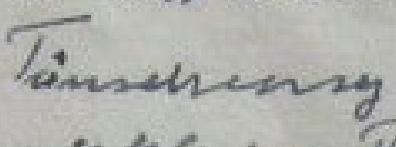
Etymologically the word delusion implies an action, a deceiving, referring here to that suffered by human beings through our consciousness, through which we perceive a deceptive appearance, the illusion of being "separated from the rest".
Although I believe that translations I have found are faithful to the originals, stripped of their context, quotations can lose much of their quality. Transliteration of punctuation, for instance, can result in an English that makes their authors sound coarse or uneducated; and 'grammatical transliterations' may substitute gender bias for the gender neutrality in an original.
Where I have edited translations it has been only in order to address issues of punctuation, prosody, and inference, that I found detracted from the content of the originals. The edits have been made with due diligence, and although I am not a professional translator or writer, I believe they are faithful, and required to make the fluency, erudition, and sensibility of the originals explicit — original texts are provided so readers may draw their own conclusions.
Footnote {delusion01a} of n_Einstein_Translation.php.
The article from which the quote was taken, although accessible in 2024 — at https://med.stanford.edu/news/all-news/2003/10/stanford-research-builds-link-between-sleep-cancer-progression.html — has now been taken down. The new article, (at Stanford research builds link between sleep, cancer progression), while still referring to Spiegal's work carries an expurgated quote that seems, intentionally or otherwise, to downplay the research and to distance Stanford from Spiegal and the opinion he expressed.
bio-psycho-physical
If it is unavoidable that descriptions of the ineffable, in some manner, are metaphorical; and if anthropocentric conceptions of the soul are set aside; then BEINGS can be defined as 'vehicles' of life, and LIFE inferred recursively.
Every BIOPHYSICAL construct requires a psychological correlate in order to survive, and any psychological construct requires a BIOPHYSICAL correlate in order to exist. In actuality, psychology is then the METABIOPHYSICAL account that is SIGNIFIED by a BEING.
BEINGS are the BIOPHYSICAL EXPRESSION of their ENDOSEMIOTIC systems, interpreting and driving change in their selves and their environments, and generating their ONTOLOGENIC sensibility of self and other that informs and motivates them..
From Cosmic Religion: with Other Opinions and Aphorisms, 1931, Covici-Friede, quoted in The Expanded Quotable Einstein, Princeton University Press; 2nd edition (May 30, 2000); Page 208.
context is king
A FRAME refers here to a frame of reference, a reference frame, or category. They are LANGUAGES, meta-LANGUAGES, that by contextualizing and defining the SIGNS that they contain and refer to, give them their meaning.
CULTURES are environmental FRAMES, meta-LANGUAGES that aggregate a community's PERCEPTION and EXPRESSION. Reflecting the wisdom, fears, and strategies that have been learned and passed on, their histories of families, communities, and peoples, are histories of privilege and trauma as varied, intransigent, and challenging to unravel as those of any individual are.
The differences between CULTURES provide opportunities for learning and development, but contextualizing and defining the LANGUAGES that evolve with them, and informing the interpretation of those that have not, they also construct semantic FALSE-FRIENDS.
This definition of the term, frames of reference, taken from the Random House Kernerman Webster's College Dictionary, aligns with the broader application of it here for FRAMES.
category mistakes
In the seventeenth century, Thomas Hobbes referred to the category errors that philosophers make. Three hundred years later, Gilbert Ryle coined the term category mistake, in The Concept Of Mind, illustrating it with several examples, one concerning a misunderstanding about universities.
The philosophical error had also been identified, by professor Heinrich Hertz, in respect of physics.
MEANING does not refer here to the output or conclusion of a cognitive function or human mind, but to motivation, founded by learning and LIFE.
being — defined recursively.
Life is the condition of being.
Being is the condition of BEINGS.
A BEING is a descendant of BEINGS.
I am a BEING.
A metatransition is a metasystem transition to either a more complex or a simpler structure, ultimately leading to a transitory or permanent evolutionary transition in individuality.
The prefix "meta-" is used here in the same manner as it is used in the term meta-language — a language that describes or contextualizes a language.
Language: a system of arbitrary signals, symbols or signs, used to communicate information.
to communicate: to convey information through a system of arbitrary signals.
Semantic: of or relating to meaning.
Meaning: the sense or reference of an EXPRESSION.
to recognize: to know something as the same as, or belonging to the same class as, something known before.
Ruppert, Edward E.; Fox, Richard, S.; Barnes, Robert D. (2004). Invertebrate Zoology, 7th edition. Cengage Learning. pp. 148-174; cited in Jellyfish, Taxonomy (list item: Staurozoa), Wikipedia..
Fautin, Daphne G. and Sandra L. Romano. 1997. Cnidaria. Sea anemones, corals, jellyfish, sea pens, hydra. Version 24 April 1997. http://tolweb.org/Cnidaria/2461/1997.04.24 in The Tree of Life Web Project, http://tolweb.org/.
Emphasizing the whole and the interdependence of its parts.
The WATERSHED here, refers to the transitional period between the Powell Memorandum, of 1971 (Greenpeace.org), and the full commercialization of the internet in 1995, from which sprang what some historians call, a second Gilded Age.